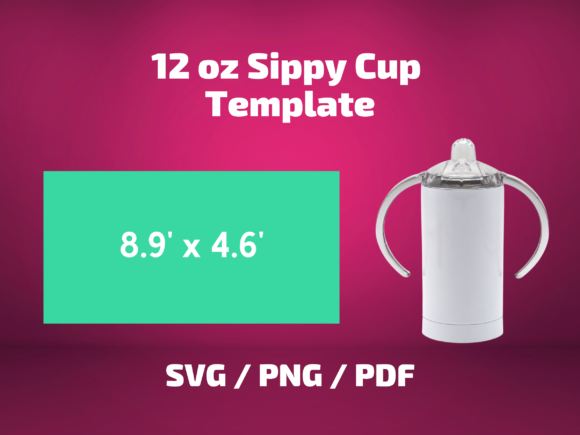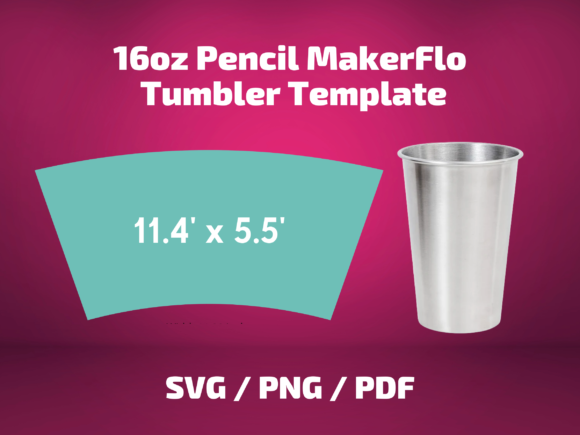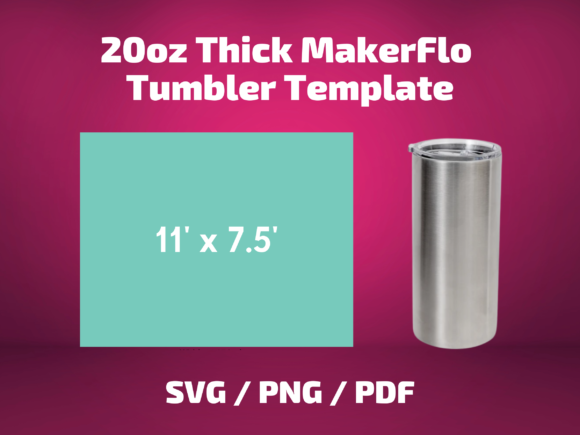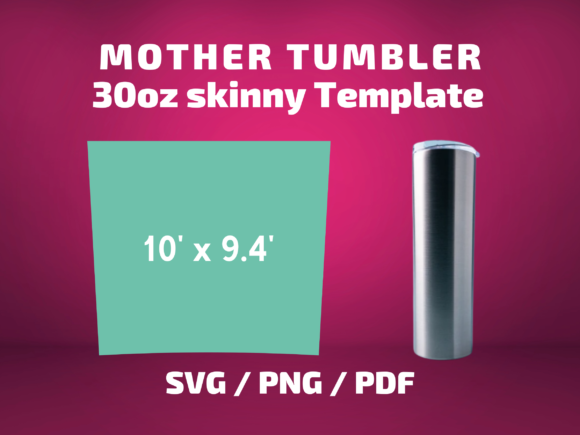
Tumbler Template Sippy Cup 10 Oz: Graphics & Print Review
When I first opened the Tumbler Template Sippy Cup 10 Oz file set, I immediately recognized it as a practical, ready-to-use asset built for a very specific niche, one that continues to grow across handmade marketplaces, print-on-demand shops, and boutique children's product lines. As a designer who regularly builds brand identities for small businesses, I need assets that can move quickly from screen to physical product without losing integrity. This template lands somewhere between a production tool and a creative starting point, and understanding that balance is key to using it well in a real client project.
The files come in SVG, PNG, and PDF formats, which already tells me the creator had multiple end users in mind. Sublimation designers will lean toward the PNG and PDF, while Cricut users and cutting machine crafters will gravitate toward the SVG. The fact that all three are bundled together makes this a flexible print template for anyone working across different software environments. From a design asset perspective, the inclusion of vector and raster options means I can scale, recolor, or adjust the template without being locked into one workflow, a critical consideration when I am building graphics for a brand that might need the same motif on a sippy cup, a matching toddler shirt, and a coordinated Instagram post.
First Impressions and Visual Mood
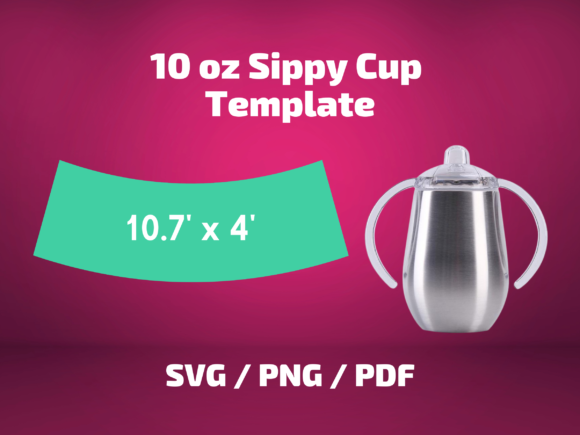
Opening the template in Adobe Illustrator, the first thing I noticed was the clean, proportionate layout designed specifically for a 10 oz tumbler. The curves follow the natural taper of a sippy cup body, and the placement guides are intuitive enough that even a junior designer or a craft business owner with basic software skills can align artwork correctly. The mood is playful, approachable, and clearly aimed at children's products, but the template itself is neutral enough that it can serve a wide range of graphic design asset styles, from whimsical watercolor animals to bold, modern typography for a mini influencer brand.
For a recent client project, a handmade baby goods shop launching a new line of personalized sippy cups, I needed a template that could accommodate name personalization, a small illustrated character, and a coordinating pattern without feeling cluttered. The Tumbler Template Sippy Cup 10 Oz gave me the structural foundation to place those elements with confidence. The wrap dimensions were accurate, and the bleed area provided enough margin for sublimation pressing without losing critical design details near the edges.
Where This Template Shines in Real Client Work
In my experience, this type of printable design asset performs best when the project demands consistency across multiple product types. If a client sells a matching set, think sippy cup, snack container, and lunch bag, having a unified template system matters. The 10 oz format is one of the most popular sizes for toddler tumblers, so this template slots easily into an existing design bundle or product lineup.
I have used similar templates for sublimation design projects where the end product is a stainless steel tumbler with a printed wrap. The curved template shape is not always easy to draft from scratch, especially if you are working against a tight deadline. Having a pre-tested template means I can devote more time to the artwork itself, refining the illustration, adjusting the visual hierarchy, and ensuring the typography feels right for the brand, rather than troubleshooting misaligned print files.
This template also works well when paired with social media graphics and product mockup imagery. I often create a flat lay of the template artwork alongside the finished product photo for a cohesive Etsy listing or Instagram carousel. The design continuity between the digital preview and the physical item builds trust with customers and reduces the gap between expectation and reality.
Practical Performance Across Design Scenarios
Over the years, I have tested templates like this one across a wide range of applications. The Tumbler Template Sippy Cup 10 Oz performs admirably in packaging design contexts where the tumbler is part of a larger gift set. The template allows me to create a coordinated wrap that matches the box design, the tissue paper pattern, and the thank-you card, all of which elevate the unboxing experience for a small business branding effort.
For Cricut project users, the SVG file is the most valuable piece. However, I must note something important here. Cricut Design Space has undergone numerous updates, and imported SVGs do not always retain their intended dimensions. The product description acknowledges this, and I have encountered the issue firsthand. When I bring the SVG into Design Space, I always double-check the scale against the listed dimensions. If the template imports at an incorrect size, I manually adjust the width and height to match the 10 oz sippy cup specifications before cutting or drawing. This is not a flaw unique to this template, it is a known behavior of the software, and any designer working with print templates for cutting machines should build this verification step into their workflow.
In Canva template environments, the PNG version offers a quick drag-and-drop solution. I have used it to create mockups for clients who need to visualize their artwork on a tumbler before committing to production. The transparency is clean, and the edges are crisp enough for screen presentation. For print-ready files, though, I always recommend working in a vector program or at least confirming that the resolution meets the printer's requirements, typically 300 DPI at actual size.
Designer Notes on Contrast, Readability, and Brand Fit
Before I commit any template to a client project, I run it through a series of practical checks. I test the layout in black and white to see if the structure holds up without color. I preview it at thumbnail size to simulate how it might appear on a mobile shopping screen. I place it on both light and dark backgrounds to evaluate contrast. The Tumbler Template Sippy Cup 10 Oz passes these tests because the template itself is a structural guide, not a decorative element. The contrast and readability will depend entirely on the artwork you place inside it, which is exactly what I want from a template.
Where I urge caution is in crowded layouts and minimalist branding scenarios. If a client's aesthetic is ultra-clean, with ample white space and restrained typography, a full-wrap tumbler template might feel visually heavy. In those cases, I use the template as a reference for the safe print area but design a partial wrap or a front-facing decal instead. The template still provides value by marking the boundaries, even if I do not fill the entire canvas.
For commercial design work, I always confirm the licensing terms. If the template is sold with a standard commercial license, I can use it in client projects and on products for resale. If the license is limited to personal use, I need to either purchase an extended license or find an alternative. I never assume, I verify, because a licensing oversight can become a costly problem down the road.
Typography Pairings and Style Compatibility
One exercise I find useful when evaluating a template is to test it with different font categories. I overlay a serif font for a classic, storybook feel, a sans serif font for a modern baby brand, a script font for a sweet, personalized look, and a handwritten font for a playful, childlike energy. The Tumbler Template Sippy Cup 10 Oz accommodates all of these comfortably because the template shape is a neutral container. The curved top and bottom edges frame the lettering nicely, and the straight middle section provides a stable baseline for horizontal text.
I have also paired the template with display fonts for bold, trend-driven designs aimed at millennial parents who appreciate styled photography and cohesive Instagram feeds. A chunky, rounded display typeface on this tumbler template photographs beautifully in a flat lay with wooden toys and muslin blankets, exactly the kind of marketing visuals that perform well on social media and in Etsy listings.
File Format Deep Dive and Production Readiness
Let me walk through the formats in more detail, because this is where a designer's review can save someone hours of frustration. The SVG design file is editable in Illustrator, Affinity Designer, Inkscape, and CorelDRAW. I can change stroke weights, adjust colors, and even modify the template shape if I need a slightly different taper for a non-standard tumbler. The PNG design file is useful for quick placements and mockups, but I always check the resolution. If the PNG is exported at 300 DPI at the correct print dimensions, it can work for sublimation. If it is a lower resolution, I use it only for screen previews and rely on the SVG or PDF for production.
The PDF file is often the safest bet for sending directly to a print shop or a sublimation printer. I open it in Acrobat, check the trim and bleed settings, and confirm that all elements are within the safe zone. Printers appreciate PDFs because they are self-contained, and I appreciate them because they reduce the chance of font or layer issues at the print stage.
For print-on-demand sellers, the template can be adapted for use with platforms that support custom tumbler printing. I have used similar templates to create Etsy product listings where the buyer personalizes the design by adding a name or choosing a color scheme. The template provides the consistent base, and the customization happens within the safe area, keeping the production process efficient and error-free.
Integrating the Template into a Cohesive Brand System
A single template rarely stands alone in a professional project. I think about how the Tumbler Template Sippy Cup 10 Oz fits into a broader brand identity. For a children's boutique, I might use the tumbler artwork as the starting point for a sticker design, a coordinating t-shirt design, a tote bag graphic, and a series of Pinterest pins. The visual continuity across these touchpoints strengthens brand recognition and makes the product line feel intentional rather than pieced together.
In editorial design contexts, such as a lookbook or a catalog, the template artwork can be extracted and placed on flat product pages alongside style photography. The clean lines of the template shape translate well to print, and the same artwork that wraps around a tumbler can sit beautifully inside a circular frame on a brochure page.
For web design and blog visuals, I often use the PNG version of the template artwork as a featured image or a product highlight graphic. The 10 oz sippy cup silhouette is instantly recognizable to parents, which helps with audience engagement and click-through rates on blogs, newsletters, and digital ads.
What I Wish More Designers Checked Before Using This Template
If I could offer one piece of advice to anyone using this template, it would be to run a physical test print before committing to a full production run. Sublimation results can vary based on the tumbler material, the heat press settings, and the paper type. A template that looks perfect on screen may shift slightly during pressing, and the only way to catch that is to produce a sample. I keep a test tumbler on my desk for exactly this purpose, and it has saved me from more than one costly mistake.
I also recommend testing the template with complex backgrounds and low-contrast designs. If the artwork relies on subtle pastel gradients, the printed result may appear washed out on a stainless steel surface. I tend to boost contrast slightly and use richer saturation for sublimation projects, knowing that the heat transfer process can soften colors. The template itself does not cause these issues, but being aware of the medium helps me make smarter design decisions from the start.
Finally, I always compare the template dimensions against the actual tumbler I plan to use. Manufacturers can vary slightly, and a template designed for one brand of 10 oz sippy cup may need minor adjustments for another. I measure the tumbler's height and circumference, compare them to the template's print area, and adjust if necessary before sending the file to production.
Why This Asset Earns a Place in My Design Toolkit
After using the Tumbler Template Sippy Cup 10 Oz in multiple client projects, I can say with confidence that it is a reliable, well-structured print template that serves a specific and valuable purpose. It is not a flashy illustration or a decorative clipart set, it is a production tool that bridges the gap between creative design and physical product. For graphic design asset collections aimed at handmade business owners, digital sellers, and print-on-demand creators, this template fills a genuine need.
The value lies in the time saved, the accuracy of the layout, and the flexibility of the file formats. Whether I am building a design bundle for a creative marketplace, preparing marketing visuals for a product launch, or creating a personalized gift for a client's customer, this template helps me deliver a polished, professional result. It understands the practical realities of sublimation design and Cricut project workflows, and it does not overpromise or underdeliver.
For designers who work in the children's product space, the toddler and baby gift market, or the personalized goods niche, the Tumbler Template Sippy Cup 10 Oz is a smart addition to a commercial design toolkit. Just remember to verify the scale, test the print, confirm the license, and treat the template as a foundation for your creativity, not a substitute for it. When you do that, the end result feels less like a template and more like a thoughtfully crafted piece of brand identity that parents will love and children will use every day.