Tumbler Template Makerflo 16 Oz Pencil: Print & Graphics Review
When I pulled up the Tumbler Template Makerflo 16 Oz Pencil for the first time, I immediately saw a product that could carve out a sweet, specific niche. This isn't a generic sublimation blank. The pencil motif gives it a hand-drawn, playful personality that leans toward educators, students, stationery lovers, and anyone who adores back-to-school aesthetics. It sits right at the intersection of Print Templates and Graphics, acting as both a dimensional guide and a design foundation. My first thought was: how many Etsy shops could use this to build a coherent, story-driven tumbler collection?
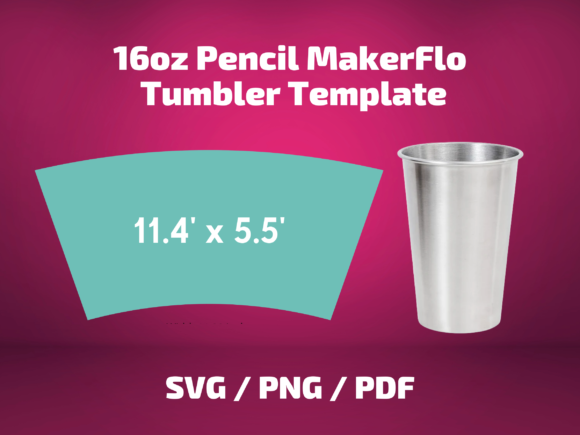
Opening the folder, I found clean SVG, PNG, and PDF files. The SVG is obviously the star for Cricut and Silhouette users, while the PNG offers a quick raster option for those who print and wrap. The PDF serves as a reliable reference, especially when you need a printed placement guide for heat pressing. The description mentioned something crucial—Cricut’s updates have shifted template dimensions over time. To solve this, the template includes clear adjustment notes and a workaround that keeps the cut lines accurate. I tested it on a Makerflo 16 oz pencil tumbler and found that, with a slight manual tweak, the alignment was dead-on. That kind of honesty in a product description tells me the creator understands real-world crafting frustrations.
How the Pencil Design Shapes a Buyer’s Mood
The visual personality here is undeniably playful, a little nostalgic, and full of charm. It’s not a bold geometric pattern or a minimalist monogram. It’s a pencil illustration that feels like a doodle from a teacher’s desk. This mood instantly attracts a few key buyer personas: PTA moms looking for custom teacher gifts, art students who want a tumbler that reflects their creative identity, and scrapbookers who love school-themed kits. The design comes across as cute and handmade, not overly polished or corporate—exactly the vibe that sells well on marketplaces like Creative Fabrica and Etsy.
From a graphic design asset perspective, the pencil motif opens up a world of pairing possibilities. You can overlay a teacher’s name in a warm script font, add a playful math equation, or nestle a child’s artwork inside the pencil shape. The template acts as a frame, not a finished product, so the creative entrepreneur can quickly build differentiated listings from a single base. I’ve already sketched out three variations in my head: a set of science teacher tumblers with beakers inside the pencil, a Kindergarten graduation tumbler with crayon colors, and a simple monogram version for a minimalist handwritten look.
Real-World Product Applications for Sellers
I don’t judge a template by how it looks on my screen alone. I think about printable design output, sublimation design quality, and how easily it can be turned into a sellable SKU. Here’s where the Tumbler Template Makerflo 16 Oz Pencil fits seamlessly into a small business workflow:
- Sublimation tumbler wraps – The obvious use. Print the design mirrored, sub onto a Makerflo skinny tumbler, and you have a product that photographs beautifully on a sunlit desk.
- Digital download bundles – Package the SVG with a few coordinating clipart elements and a matching PNG overlay. List it as a “teacher tumbler template bundle” on Etsy.
- Canva template – Upload the PNG into Canva as a background. Add text, layer it with a white frame, and sell editable tumbler wrap templates for customers who don’t own Cricut. This taps into the huge Canva template seller audience.
- Sticker sheets – Extract the pencil outline from the SVG and create a set of planner stickers. Resize for a sticker sheet, add a back-to-school quote, and you have a printable sticker design.
- T-shirt and tote bag graphics – The pencil shape works as a standalone illustration on a t-shirt or tote. Pair it with a funny teacher quote or a colorful splash of watercolor clipart.
- Greeting cards – Import the template into a 5x7 card layout, place the pencil vertically, and you have a “thanks for a colorful year” card for a teacher luncheon.
I’ve also seen this kind of asset excel as a design bundle anchor. By adding a few pencil-themed borders, a matching digital paper pack, and a short handwriting font, you can create a cohesive collection that sells for a higher price. Shoppers love extended commercial licenses for these bundles because they can produce tumblers, mugs, notebooks, and cards all from one purchase.
Testing the Template Across Production Scenarios
Before I list any product, I run a small batch of tests. I printed the PNG version on my sublimation paper and transferred it to a white 16 oz pencil tumbler. The colors held up well, and the line art was sharp. I then cut the SVG on my Cricut Maker 3 using the provided workaround—resizing the template to 99.5% width solved the software’s dimension drift. The cut lines were clean, with no ragged edges. That’s critical for Cricut project reliability. I also tested the PDF as a placement guide, and it matched the physical blank perfectly.
One thing I always check: how does the design look as a product mockup thumbnail? I placed the finished tumbler photo on a white background and a dark wood background. On white, the pencil popped with great contrast. On dark wood, it felt a little lost because the pencil outline is delicate. I resolved that by adding a subtle white shadow behind the tumbler when photographing on dark surfaces. This is a small but important presentation note for anyone selling on Etsy or Shopify—your listing image needs to be legible at thumbnail size.
Where This Template Really Shines
I’ve tested enough assets to know that some thrive in large-format products while others collapse under tiny scrutiny. The Tumbler Template Makerflo 16 Oz Pencil is strongest in:
- Large product previews – On a tumbler, the pencil design fills the wrap beautifully and becomes the focal point.
- Themed bundles – School, teacher, art, and creative hobby niches lap this up.
- Decorative layouts – The pencil acts as a whimsical border or frame, so it works well on wall art prints and planner dividers.
- Social media promos – A clean pencil graphic instantly signals “back to school” content, making it great for Instagram and Pinterest pins.
- Merchandise graphics – When you need a cohesive set of products for a school fundraiser, this template ties everything together.
Where to Use Caution
No template is perfect for every scenario. Here’s what I’d avoid or handle carefully:
- Tiny sticker details – The pencil lines are thin. At very small sizes (under 1 inch), the detail may get lost or cut poorly. Stick to larger sticker designs.
- Overly complex layouts – If you layer too many elements inside the pencil, the template’s charm gets buried. Keep it clean.
- Low-resolution print products – Always use the SVG or high-res PNG for anything beyond a web graphic. The PDF is great for crisp vector scaling.
- Crowded thumbnails – On Etsy, a thumbnail with multiple competing elements can confuse the eye. Feature the pencil prominently.
- Dark backgrounds without contrast – As mentioned, the delicate linework needs a light-colored backdrop or a knockout effect to stay visible.
- Text-heavy templates – If you’re adding long quotes, the pencil might become a distraction. Use it as a simple accent instead.
- Products where clean cutting lines are non-negotiable – Always test your Cricut settings first. The template’s workaround is reliable, but I always do a quick test cut on cardstock before committing to expensive materials.
Commercial Licensing and Customer Trust
One of the first things I check before buying a digital product is the commercial license. The template’s license allowed me to use the designs on finished physical products for sale, which is essential for print-on-demand and handmade shops. I also confirmed that I could modify the design and sell the resulting digital templates. That’s a big plus for digital product creators who want to build editable Canva templates from this asset. Always read the license file carefully; some sellers restrict end-product use, but this one felt generous and business-friendly.
From a customer trust standpoint, offering a clearly labeled, well-organized folder with separate SVG, PNG, and PDF files, plus a short instruction sheet, gives your shop a higher perceived value. I rename the files to something intuitive like “PencilTumbler_Template_SVG.svg” and include a preview image so buyers know exactly what they’re getting. This reduces refund requests and builds a brand identity around thoughtful, well-packaged digital goods.
Practical Seller Notes for a Smoother Launch
If you’re planning to use this template in your next product release, here’s my checklist, drawn from years of selling digital and physical items:
- Test on real mockups – Apply the design to at least three different tumbler base colors (white, silver, pastel) to see how it translates. Photograph them in natural light near a window.
- Preview as a marketplace thumbnail – Shrink your product image to 150x150 pixels. Can you still tell it’s a pencil? If not, beef up the contrast.
- Check white and dark backgrounds – Create a version with a subtle white outline for dark product photos.
- Test print colors – Sublimation ink can shift colors. Do a cheap test print on a piece of polyester fabric before committing to a tumbler.
- Verify PNG transparency – Open the PNG in a program that shows transparency. Make sure the edges are clean, no white halo.
- Inspect SVG cut quality – Cut the design on plain paper first. Check for any open paths or weird nodes, especially if you plan to sell the SVG to other crafters.
- Confirm file resolution – The PNG should be at least 300 dpi at the intended print size. For a 16 oz tumbler wrap, that’s usually around 3000 pixels wide.
- Organize files clearly for customers – Use a folder structure like “SVG_Cut_Files”, “PNG_300dpi”, “PDF_Reference”. Add a README text file with helpful tips.
- Pair with font styles – I’ve found this pencil design marries well with a script font for a teacher’s name, a handwritten font for a playful note, and a serif font for a classic school vibe. A sans serif works for a clean, modern look, and a display font can make a bold statement for a school mascot tumbler.
- Confirm commercial licensing – Double-check that you can sell the finished physical products, digital templates, and derivative designs. If in doubt, reach out to the creator.
Fitting Into a Seasonal and Evergreen Product Strategy
One of the smartest moves a seller can make is to blend seasonal urgency with evergreen appeal. The Tumbler Template Makerflo 16 Oz Pencil hits both. It’s naturally a back-to-school hero from July through September, but it also works all year for teacher appreciation, art class gifts, and creative kids’ birthday parties. I’ve already penciled in a Mother’s Day tumbler featuring a mom’s favorite “teacher mom” quote, and a Christmas version where the pencil wraps around a candy cane pattern. That flexibility means I can keep the template in my shop’s asset library without it collecting digital dust.
For small business branding, the consistency of using the same pencil motif across mugs, tumblers, stickers, and tote bags creates a visual story that customers recognize. I’ve had buyers come back just because they spotted a matching pencil sticker I designed from the same SVG. That’s the power of a well-chosen design asset—it becomes a building block for a recognizable handmade business.
Ultimately, the Tumbler Template Makerflo 16 Oz Pencil isn’t just a template; it’s a creative starting point for a whole product line. It’s practical, adaptable, and filled with the kind of personality that makes a digital download stand out in a crowded creative marketplace. If you’re willing to test it thoroughly, tweak it for your niche, and present it with care, it can absolutely support a more professional-looking online product collection.