Tumbler Template Makerflo 12oz Mason Jar
First Look at the Mason Jar Graphic
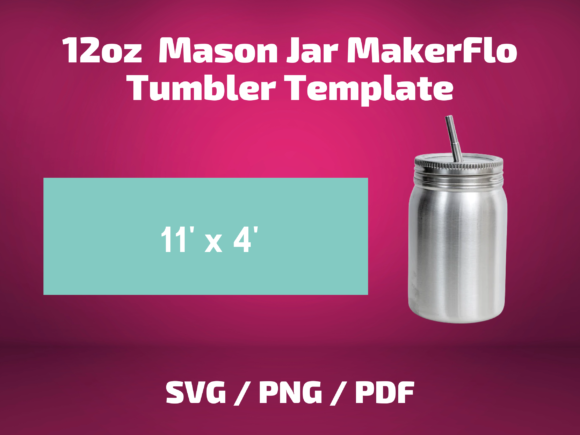
When I opened the Tumbler Template Makerflo 12oz Mason Jar file, what immediately struck me was the silhouette’s quiet confidence. It’s not trying too hard. The jar shape is clean, balanced, and instantly recognizable — the kind of everyday object that carries a lot of nostalgic warmth. As a designer who regularly stitches out branded kitchen lines and gift collections, I could see this graphic becoming a cozy anchor for a whole product series. The simple curves of the mason jar, the subtle shoulder, and the lower transparency zone read as a modern, pared‑back version of the classic canning jar. This isn’t a frilly, over‑detailed vintage graphic; it’s a calm, open shape that invites the maker to add their own twist, whether that’s a floral burst, a monogram, or a cheeky quote.
Because the download comes as SVG, PNG, and PDF, my first thought was about versatility. In embroidery, we rarely use a template exactly as given. I immediately started picturing how this jar outline would behave as a clean satin stitch border on a linen tea towel, or how the whole shape could be converted into a lightly filled motif for a zippered pouch. The Graphics category feels right — this is a building block, not a finished scene. It sets a mood that’s equal parts farmhouse, modern rustic, and handmade charm. From an embroidery designer’s perspective, that mood is a strong selling point for small businesses that trade on cozy, heartfelt aesthetics.
How the Shape Translates to Stitch
Testing design assets in real embroidery projects means thinking beyond the screen. I loaded the PNG into my digitizing software to see how the outline would trace. The jar’s edges are smooth, no overly complex notches or distracting flourishes. That’s a good sign. In machine embroidery, every unnecessary curve is a chance for puckering or misregistration. The Tumbler Template Makerflo 12oz Mason Jar keeps the perimeter simple, which means a satin stitch border will look crisp and professional, even at smaller sizes. The flat bottom and the gentle arc of the lid area are particularly well suited for a fill stitch interpretation if you want a solid mason jar motif, or a running stitch outline if you prefer a lighter, sketchy look.
One thing I always check is how the inner space interacts with the outer border. The transparent area of the jar — the section that in a sublimation print would let the tumbler color show through — becomes a design decision in embroidery. I’d likely digitize that as an open area, letting the fabric act as the “glass.” That approach works beautifully on natural linen, oatmeal cotton, or chambray. On a dark sweatshirt, though, you’d need to plan for a backing fill so the jar doesn’t disappear. I’ll touch on fabric choices later. The point is that this template’s negative space is a thoughtful feature, not a mistake. It gives the embroiderer control.
Where This Design Really Belongs
After spending an evening with the template, I kept circling back to a single project: a custom embroidered kitchen towel set for a boutique’s summer collection. Picture this on a flour‑sack towel, stitched in a soft sage green with a delicate “fresh from the garden” text arcing above the jar. That’s the sort of product that stops a customer at a craft fair. The Tumbler Template Makerflo 12oz Mason Jar feels born for aprons, bread bags, pantry labels, and tea towels. It’s not a design that screams for a loud, oversized hoodie placement. It’s more at home on a crisp, natural‑fiber background where the thread texture can do the talking.
For baby clothes, the gentle curves make it a sweet choice for a onesie or a bib, especially if you fill the jar with a few simple embroidered flowers or a tiny bird. As a patch, the outline would sew up quickly on a medium‑weight canvas, and the shape fits a standard 4x4 inch hoop without feeling cramped. I’d also confidently use this on a set of linen pillow covers for a wedding or housewarming gift. The understated personality means it won’t compete with a couple’s style; it’ll add just enough handmade presence to feel personal and intentional.
Real‑World Stitching Considerations
All of that potential comes with a short list of practical cautions. The first is size. If you’re using a 4x4 inch hoop, the jar’s proportions will determine the maximum width. The template’s description notes that Cricut updates sometimes affect dimensions, and that’s a fair warning for embroiderers too. Always measure the actual outline in your software before digitizing. I sized the jar to about 3.5 inches wide for a test stitch‑out on a quilting cotton scrap, and the details held together well. Push it under 2.5 inches, and the lid threads might start to blur, especially if you’re using a standard 40‑weight thread. For tiny lettering inside the jar, I’d keep the design larger than 3 inches wide.
Fabric choice matters enormously. A smooth, stable woven like cotton twill, linen, or even a tightly knit jersey (with the right cut‑away stabilizer) will show off the jar’s silhouette. On a slubby, textured fabric or a thick terry towel, the outline will lose definition fast. I’d avoid using this on a highly stretchy performance tee without serious testing; the curves could distort. For caps, the curved surface means you’ll want to place the jar low and centered on the front panel, but the flat bottom of the jar might look odd if the cap’s crown is too rounded. I’d test placement on a blank cap before committing to a client order.
Color, Contrast, and Customer Perception
One of my favorite exercises with any new design asset is to test it in black and white. I printed the jar outline on paper and held it against a range of fabric swatches. On a natural beige background, the shape reads as a crisp, airy outline. On a heathered charcoal, the jar almost vanishes unless you fill it with a lighter thread. That’s not a flaw — it’s a creative prompt. For light fabrics, a single‑color satin stitch outline in a muted tone like olive, terracotta, or dusty blue creates an elegant, minimalist finish. For dark fabrics, consider filling the jar body with a soft cream or oatmeal thread, then adding small details like a ribbon or a sprig of lavender in contrasting colors. That transforms the simple Graphics file into a multi‑dimensional embroidery piece.
From a buyer’s perspective, a well‑stitched mason jar motif signals care. I’ve seen products where a poorly scaled jar outline looked lumpy and uneven, and it immediately cheapened the whole item. The Tumbler Template Makerflo 12oz Mason Jar has the bones to avoid that, but only if the embroiderer respects the shape’s simplicity. Over‑digitizing with dense fill stitches or excessive underlay can make the fabric stiff and wavy. A light touch with a satin stitch border, maybe a single run of running stitch shadow, will keep the jar looking airy and professional.
Building a Small‑Shop Product Around This Template
I run a small embroidery business that leans heavily on personalized gifts, and I’m always hunting for designs that can be adapted quickly without losing their charm. The mason jar is a perennial favorite. With this Print Templates asset, I can see at least a dozen variations: a “mama’s herbs” jar on a kitchen towel, a “grandma’s flowers” jar on a tote bag, a “love you a latte” jar on a coffee sleeve, or a sunshine‑filled jar on a baby blanket. The fact that the file is provided as a PDF, SVG, and PNG means I can easily print a paper mockup, tape it to a product, and send a photo to a client for approval before I ever fire up the machine. That step alone builds trust and reduces rework.
For Etsy sellers, this template slots perfectly into the digital product preview world. You can use the PNG on a mockup pillow or apron to create a listing image that shows exactly how the finished embroidery will look, even if you’re selling a custom‑order service. The clean lines photograph well and don’t distract from the product itself. Just be aware that the template is a sublimation resource originally, so if you’re using it as a digital embroidery mockup, you’ll need to clarify to customers that the final item is stitched, not printed. That’s a small but important note for maintaining honest communication.
A Thoughtful Approach to Commercial Use
Before you stitch this out for a client, check the license terms that came with the download. The Tumbler Template Makerflo 12oz Mason Jar is a Graphics file, and many template creators specify whether the design can be used on finished products for sale. I always assume nothing and verify. If the license allows commercial embroidery use, great. If it’s strictly for personal projects or sublimation blanks, you’ll need to source a separate embroidery‑ready file or digitize a similar shape yourself. Never guess. A quick email to the designer can save you from a sticky situation later.
Also, since this isn’t a pre‑digitized embroidery file, you’ll need to convert it. If you’re comfortable with digitizing, the SVG is a dream to auto‑trace. The clean vectors mean minimal node cleanup. If you’re not a digitizer, you’ll need to work with someone who can turn the template into a stitch file. In either case, run a test stitch on scrap fabric first. I always do. I use a medium‑weight cut‑away stabilizer, a 75/11 embroidery needle, and a 40‑weight polyester thread. The first test will tell you if the stitch density needs adjusting, if the pull compensation is off, or if the lid threads are too crowded. I made a small adjustment to the lid’s inner circle on my test to avoid a dense buildup of stitches, and the second version was perfect.
Where the Design Shines Brightest
After working with the template, I’d put it on these products without hesitation: flour sack towels, linen bread bags, cotton aprons, canvas tote bags, zippered pouches, and nursery‑themed pillows. It’s also a strong candidate for personalized holiday gifts — think a jar filled with embroidered candy canes on a Christmas stocking, or a jar with a heart on a Valentine’s tea towel. The shape’s universal recognition means customers don’t need to squint to understand what they’re looking at. That instant recognition adds to the perceived value of the handmade item.
I’d be a little more cautious on anything that needs frequent, aggressive washing, like a kitchen towel that’ll go through the dryer on high heat. The fine satin stitch could wear over time. Always use a topping film on napped fabrics to keep the crisp outline. For the best results, I recommend a low‑to‑medium stitch density and a good quality thread that won’t fade. A little bit of care in the finishing will make the jar look as fresh after a dozen washes as it did on day one.
Final Thoughts from a Stitching Perspective
The Tumbler Template Makerflo 12oz Mason Jar is a deceptively simple design asset that rewards a thoughtful embroiderer. It doesn’t do the work for you, but it gives you a solid, flexible foundation. I appreciate how the shape encourages personalization without feeling like a generic clip‑art pickup. For small business owners who want to build a cohesive product line around a homey, rustic aesthetic, this template is a smart investment. Just remember to test your sizing, choose your fabrics wisely, and let the negative space speak. Stitch it with a light hand, pair it with a meaningful phrase, and you’ll have a product that feels like a warm hug in thread form.