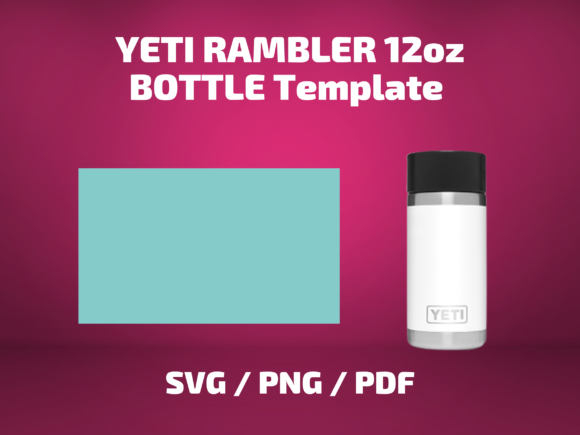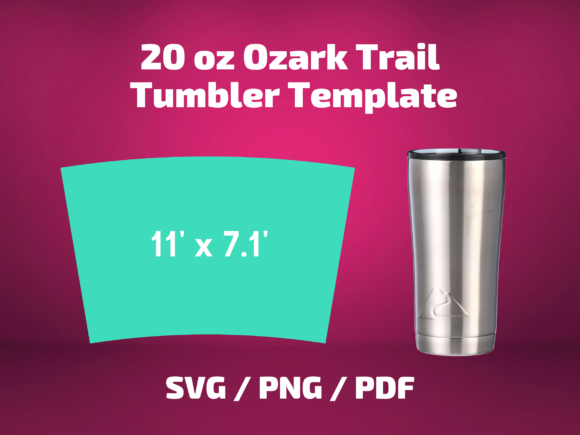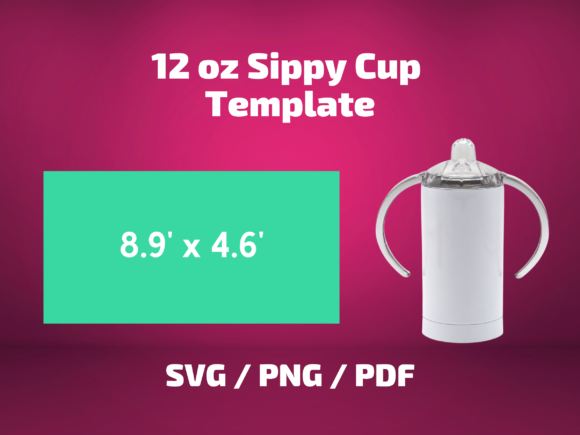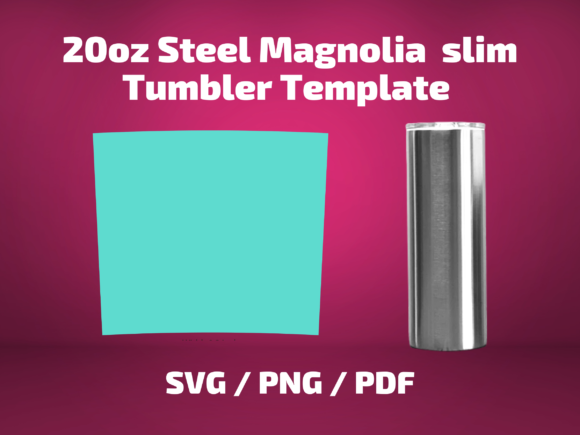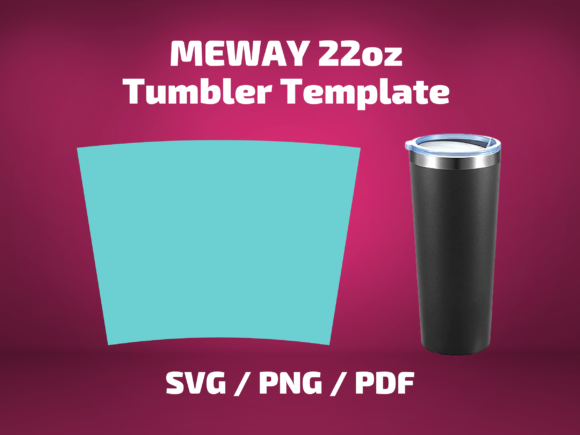
Tumbler Template MEWAY 22 Oz for Print & Graphics
A recent client project brought me face‑to‑face with the Tumbler Template MEWAY 22 Oz – a set of SVG, PNG, and PDF files created specifically for sublimation onto 22‑ounce MEWAY tumblers. The client, a small‑batch coffee roastery launching a new seasonal blend, needed a complete visual identity that extended from the bag label all the way to a branded tumbler. The job wasn’t just about slapping a logo on a cup; it demanded a seamless, wrap‑around design that felt as intentional as the packaging itself. That’s where this template entered the conversation.
My first impression was one of quiet competence. The template isn’t trying to be flashy. It’s a precise, dimension‑aware guide that clearly understands the curved surface of a tumbler and the distortion that can happen when a flat design meets a cylindrical object. The mood it creates is clean, orderly, and ready for creative input – exactly what you want when you’re building a brand touchpoint meant to be held in someone’s hand every morning. The style leans toward modern, functional, and sublimation‑focused, which makes it a natural fit for handmade businesses, Etsy shops, print‑on‑demand sellers, and any small brand that wants to offer a polished, repeatable product. It doesn’t impose a decorative aesthetic; instead, it provides a trustworthy skeleton that lets your own graphic identity shine.
When a Template Feels Like a Blank Canvas
The real value of a design asset like this lies in how quickly it lets you transition from concept to mockup. With the roastery project, I needed to test three different label concepts – a moody botanical illustration, a bold typographic lockup, and a minimalist geometric pattern – all on the same tumbler form. The SVG PNG PDF template for tumbler MEWAY 22 oz gave me that flexibility instantly. I dropped each design layer into the template file, adjusted the bleed and the safe zone, and within minutes had a realistic preview of how the wrap would look on glass. The SVG file, in particular, allowed me to edit paths and scale elements without losing a pixel of crispness, which is critical when you’re working with fine lines or small brand marks.
For crafters and Cricut users, the template’s purpose shifts slightly. The note in the product description – “Cricut has had many updates, so the templates may not take the correct dimensions. To solve this problem you need to man” – alerts you to a real‑world friction point. I’ve encountered this before: a Cricut machine’s software may interpret SVG dimensions differently after a firmware update, leading to a cut that’s off by a fraction of an inch. The solution, as the snippet hints, is manual intervention – checking the size in Design Space, unlocking the aspect ratio, and entering the exact 22 oz tumbler measurements yourself. This isn’t a flaw of the template; it’s a reminder that sublimation work requires a blend of digital precision and hands‑on calibration. Any designer taking this into a client project should bake that testing step into the workflow.
The Visual Personality of a 22 Oz Sublimation Guide
When I assess a graphic design asset like this, I’m not just looking at lines on a screen. I’m imagining how it behaves across a dozen different applications. The MEWAY 22 oz template thrives in settings where the design needs to wrap completely around a product – product mockups, packaging design, and merchandise are the obvious homes. But I also see it as a powerful tool for social media graphics and marketing visuals. Instead of photographing a physical tumbler at every stage, you can drop a flat design into the template, render a quick mockup, and post a photorealistic product teaser on Instagram or Pinterest. For the roastery, that meant I could share a series of “coming soon” tumbler concepts while the actual products were still in production, building anticipation without a single physical sample.
In terms of style, this template doesn’t belong to any one aesthetic, but it does have a structural bias. The clean, precise guide lines and the absence of decorative flourishes make it a stronger partner for modern design, minimalist branding, and handmade business identities that rely on illustration or typography. The asset works beautifully as a digital product for designers who sell sublimation design bundles or printable design files – you can package your own artwork inside this template and resell the ready‑to‑press file, as long as you confirm the commercial license terms first.
Where the Template Performs at Its Best
I would place this asset without hesitation in projects that have a clear focal point. Large, wrap‑around hero graphics, panoramic illustrations, and bold typographic statements all sing on this template. The generous 22 oz surface gives you room to create a design that feels immersive, and the template’s guide layers help you avoid stretching critical elements too close to the top or bottom rim where the curve distorts. For brand identity work, this means you can design a logo design lockup that reads clearly from a distance, paired with a supporting pattern that fills the rest of the tumbler body. The template also works well for themed collections – think holiday gift sets, bridal party tumblers, or a limited‑edition artist collaboration – where consistency across multiple units is everything.
In printable design and design bundle markets, the PDF version is a quiet hero. I’ve seen sellers use it to create a Canva template that buyers can customize themselves, dropping in photos and text without touching the technical alignment. That opens up a whole audience of brand owners and content creators who want a professional tumbler wrap but don’t work inside Adobe Illustrator. The SVG and PNG files, meanwhile, cater to the more hands‑on crowd: Cricut project crafters, sticker design makers, and t‑shirt design pros who might also apply the same wrap to other cylindrical products.
Where You Need to Apply Extra Care
No template is a magic wand, and this one has clear boundaries. I would avoid using it for designs that rely on tiny, high‑contrast text or intricate line work that needs to stay perfectly legible at the tumbler’s top and bottom edges. The physical distortion of sublimation pressing can make 6‑point type illegible or warp a delicate illustration into a funhouse mirror. Similarly, if you’re working on a professional corporate materials project that demands a very rigid, Swiss‑style grid, the curved, wrap‑around nature of a tumbler will fight you. The template is a tool for real‑world products, not a flat poster, and it rewards designs that embrace that organic, tactile quality.
You should also be cautious with low‑contrast designs or subtle gradients that depend on an exact background value. Sublimation on stainless steel can shift colors slightly, and the template’s white areas correspond to the bare metal surface. I always test the design on a product mockup with a metallic base, not just a white canvas, to see how the overall brightness changes. The PNG design file’s transparency is perfect for this – you can place it over a photo of the tumbler and get a much more honest preview.
How the Template Shapes Readability and Brand Trust
In the roastery project, the tumbler wasn’t just a product; it was a loyalty token. Customers who bought the seasonal blend received a custom tumbler, and the client wanted the design to feel like a gift, not a disposable giveaway. The Tumbler Template MEWAY 22 Oz directly influenced the visual hierarchy of the final piece. By using the template’s safe zone, I could guarantee that the roastery’s hand‑lettered logo sat at eye level, the blend name was clearly readable, and a subtle botanical motif wrapped around the sides without overpowering the brand mark. The result had a clarity that felt intentional, not accidental, and that intentionality is what builds visual trust and brand consistency.
From an audience engagement perspective, a well‑executed tumbler design does more than hold coffee. It becomes a prop in Instagram stories, a conversation starter, and a walking advertisement. When the template is built correctly, the design stays true from every angle, which increases recognition and emotional appeal. I’ve seen that play out with the roastery: customers started posting photos of their tumblers in different settings, and the consistent wrap meant the brand was always front and center, no matter the rotation.
Practical Checks Every Designer Should Run
Before I hand over any file to a client or a printer, I put the template through a series of stress tests. With the MEWAY 22 oz template, I always check the design in black and white first – this reveals any contrast issues that could wash out during sublimation. Then I flip the preview between a light background and a dark background to see how the transparency holds up. The PNG files, in particular, need to be inspected for any stray white pixels along the edges that could create a halo on dark metal.
I also preview the design at both small and large sizes. At thumbnail scale, the tumbler wrap should still read as a coherent brand piece; at full mockup size, there should be no pixelation. Because the asset includes SVG, I can scale it infinitely, but I still render a high‑resolution PNG export to test the print quality on a standard home sublimation printer and a professional press. The difference in color saturation between the two can be significant, and the template’s layered structure lets me adjust the artwork without redrawing from scratch.
When I review the file formats themselves, I open the SVG in Adobe Illustrator and Affinity Designer to confirm editability. I look for grouped objects, embedded fonts, and any clipping masks that might surprise a less experienced user. The PDF’s trim marks and bleed area need to be accurate, and I always check the PNG transparency by dropping it onto a wood‑textured background – a real‑world sublimation surface that can reveal if the “transparent” areas are truly transparent. For a commercial design project, I also compare the template with different font styles. A serif font on a tumbler wrap can feel elegant but may lose thin strokes at the edges; a sans serif font tends to hold up better; script font and handwritten font styles add warmth but can become illegible if scaled too small. The template itself doesn’t force any type choice, but it does demand that you test each one within the curved boundaries.
From Creative Marketplace to Client Delivery
For designers who sell digital products on creative marketplace platforms like Etsy or Creative Fabrica, the Tumbler Template MEWAY 22 Oz is a reliable base asset. It shortens the production time for a print-on-demand listing, and because it’s already dimensioned for a popular tumbler brand, it reduces the risk of a customer complaint about bad fit. I’ve used similar templates to create design bundles that include a full wrap, a coordinating pattern, and social media graphics – all built around the same template skeleton. That kind of reproducibility is gold for small business branding and handmade business sellers who need to move fast without sacrificing quality.
However, the note about Cricut updates is a critical reminder that no template is set‑and‑forget. Every time the device software changes, you need to re‑verify the dimensions. I’ve made it a habit to keep a physical MEWAY 22 oz tumbler on hand, print a test wrap on regular paper, and tape it to the cup before committing to a sublimation blank. It’s a small step, but it catches the millimeter‑level shifts that can ruin a batch. That’s the difference between a graphic design asset that looks good on a screen and one that actually performs in a client’s hand.
Ultimately, the Tumbler Template MEWAY 22 Oz earns its place in a professional toolkit because it respects the realities of production. It doesn’t pretend that a tumbler is a flat poster, and it doesn’t over‑decorate the starting point. It gives you a clean, structured foundation that you can dress up with your own illustration, clipart, or Canva template elements. For a graphic design asset that costs significantly less than the time it takes to build a custom template from scratch, it’s a pragmatic choice – as long as you walk in with your eyes open about the calibration steps and license requirements. In the roastery project, that little template became the difference between a tumbler that looked like an afterthought and one that made the brand feel complete. And that’s exactly the kind of impact a designer should be chasing.