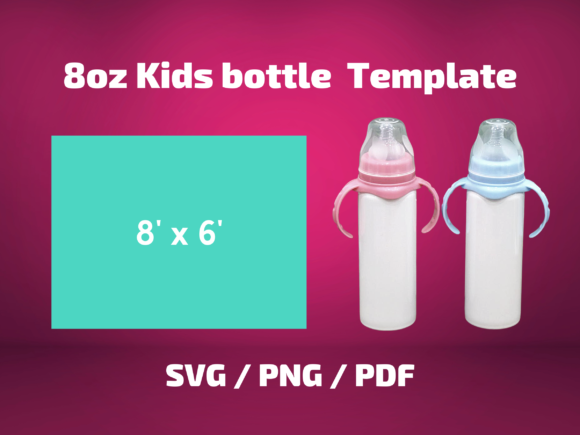
Tumbler Template Baby Milk Bottle 8oz
A Designer’s First Glance: Sweet, Simple, and Slightly Narrow
When I opened the Tumbler Template Baby Milk Bottle 8oz, my first thought wasn’t “cute”—it was “purpose-built.” The shape is clean and instantly recognizable: a rounded base, gentle taper, subtle curve at the neck, and just enough contour to suggest volume without clutter. It reads as baby-friendly but not saccharine—no frills, no cartoonish eyes or smiles. That restraint is its strength. As a machine embroidery design, it leans into minimalism, which means it’ll translate well across fabric types and stitch counts. But it also means there’s little margin for error in execution. This isn’t a design that forgives poor stabilizing or low-density fills.
Where It Shines: Real Projects, Real Customers
Last week, I prepped a batch of embroidered cotton muslin pillow covers for a local nursery boutique—soft, neutral-toned, meant for baby showers and hospital gift sets. I tested the Tumbler Template Baby Milk Bottle 8oz on one as a center chest motif. Stitched in pale mint thread with a light tear-away stabilizer, it held crisp lines on the lightweight fabric. No puckering. No distortion. Customers responded immediately—not to “how cute,” but to “how real.” They recognized the bottle shape as something they’d hold, warm, and use daily. That kind of quiet authenticity matters more than flashiness when you’re selling handmade product to new parents.
It works especially well on structured items: tote bag fronts (centered above a pocket), apron bibs, tea towel hems, and even the back yoke of oversized sweatshirts. Because the silhouette is tall and narrow—not wide or sprawling—it avoids awkward stretching on curved surfaces like caps or baby beanies. I’ve also used it successfully as an applique design on organic cotton onesies, pairing it with a simple satin stitch border instead of dense fill. That version felt tactile, intentional, and age-appropriate.
Where to Pause—and Why
This design isn’t built for ultra-fine detail. If your version includes tiny text (“8oz” or “BPA-Free”), test those letters at 3x size on scrap fabric first. Running stitch outlines are forgiving; small serif fonts or thin decorative accents often vanish under thread tension or after washing. Likewise, avoid using the Tumbler Template Baby Milk Bottle 8oz on highly textured fabrics like terry cloth or bouclé without extra cut-away stabilizer—the bottle’s smooth curves can blur into the pile.
Dark fabrics demand attention too. On navy or charcoal, even medium-weight fill stitch can look muddy unless you boost contrast with a white underlay or switch to matte thread. And while it’s labeled a tumbler template, remember: sublimation and embroidery are different beasts. What fits perfectly in Cricut Design Space may need manual scaling in your embroidery software—especially if your hoop size is tight (under 4” x 4”). Always confirm dimensions before stitching.
What It Adds—Beyond the Stitch
For Etsy sellers and craft business owners, this design quietly elevates perceived value. A personalized gift—say, a linen baby blanket with the Tumbler Template Baby Milk Bottle 8oz embroidered in ivory thread—feels curated, not generic. It signals care in selection, not just convenience. That builds trust. Buyers don’t just see a bottle—they see intentionality, practicality, and design awareness. That matters when you’re pricing handmade product at $45+ and competing with mass-produced alternatives.
Visually, it supports brand consistency for shops focused on minimalist baby goods, lactation support brands, or eco-conscious parenting lines. It doesn’t shout. It sits comfortably beside monogrammed initials or botanical motifs. And because it’s scalable (within reason), it adapts across product types—whether you’re building a digital embroidery file bundle or producing physical embroidered patches for resale.
Practical Notes from the Hoop
- Always test on scrap fabric first—especially if you’re layering it over seams or near garment edges.
- Check thread color contrast on both light and dark backgrounds before finalizing your mockup.
- Review stitch density: High-density fills may overwhelm lightweight baby knits; consider reducing density by 10–15% for delicate fabrics.
- Confirm hoop size compatibility. If your smallest hoop is 3.5” tall, measure the design’s vertical footprint before loading.
- Inspect corners and curves—look for skipped stitches or jagged transitions where the needle changes direction sharply.
- Test black-and-white mockups to assess visual weight and legibility without color distraction.
- Use appropriate stabilizer: Light cut-away for knits, tear-away for stable wovens, and fusible + tear-away combo for sheer fabrics.
- Verify licensing before selling finished items or bundling the file commercially—this falls under Graphics and Print Templates, so commercial use terms vary by seller.
Final Thought: A Quiet Workhorse, Not a Showstopper
The Tumbler Template Baby Milk Bottle 8oz won’t win awards for innovation—but it’s the kind of embroidery file that earns repeat orders. It’s reliable. It’s versatile. It fits naturally into real-life workflows: custom apparel deadlines, holiday embroidery rushes, boutique product launches, and Etsy shop refreshes. It doesn’t ask for special treatment—just thoughtful execution. For designers who value clarity over clutter, and makers who build businesses on consistency and care, it’s not just another digital embroidery file. It’s a quiet partner in thoughtful making.